
Understanding Dog Aggression — Causes, Warning Signs and When to Get Professional Help
Updated: 1 day ago
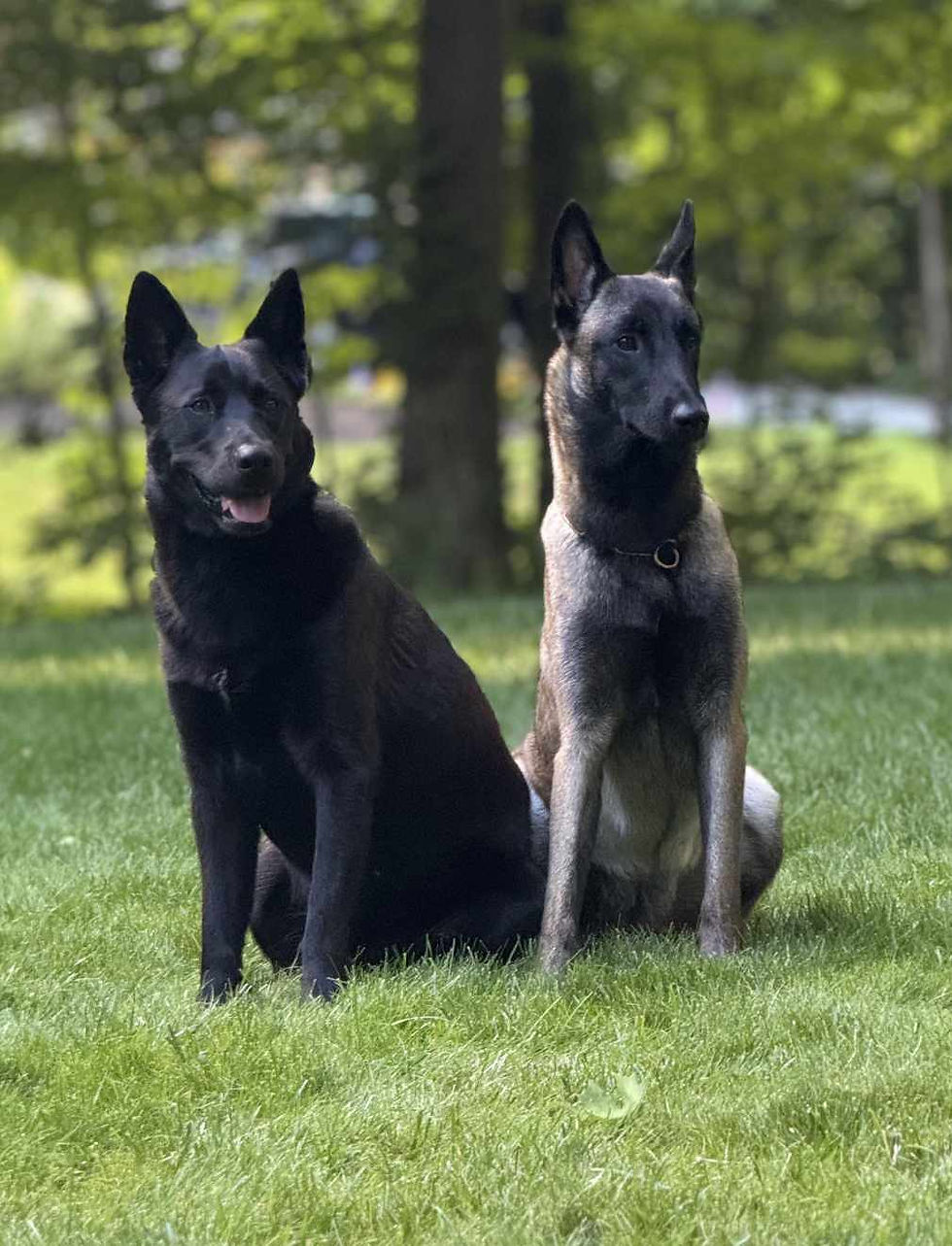
Growling, barking, lunging, snapping and biting are often described simply as “aggression”.
But aggression is not a personality trait and it does not automatically mean that a dog is dangerous, dominant or “bad”.
Aggressive behaviour is usually part of a dog's response to a particular situation. It may be influenced by fear, frustration, pain, guarding, conflict, overarousal, previous learning, genetics or a combination of several factors.
To change aggressive behaviour effectively, we first need to understand why it is happening.
What Does Dog Aggression Actually Mean?
Aggression is a broad term used to describe behaviours that can threaten, increase distance or protect something important to the dog.
These behaviours can include:
freezing or becoming suddenly still
hard staring
growling
showing teeth
barking
lunging
snapping
biting
Importantly, a bite rarely appears completely without context.
Dogs often show more subtle signs of discomfort first, such as turning their head away, avoiding interaction, moving away, licking their lips, becoming tense or freezing.
These signals can easily be missed.
This is one reason I do not recommend punishing a dog for growling. A growl is valuable communication. Suppressing the warning does not necessarily change the emotion or motivation underneath it.
Why Do Dogs Become Aggressive?
There is rarely one simple explanation.
Two dogs may both growl at a visitor but be doing so for completely different reasons.
One may be frightened.
Another may be guarding their owner or home.
Another may have learned that growling reliably makes people move away.
Understanding the function and context of the behaviour is therefore much more useful than simply attaching a label to the dog.
Some common situations associated with aggressive behaviour include:
Fear-Related Aggression
Fear is a common contributor to aggression.
A frightened dog may bark, growl, lunge or bite because they are trying to create distance from something they perceive as threatening.
Triggers may include:
unfamiliar people
other dogs
veterinary handling
grooming
being approached while resting
unfamiliar environments
sudden movements or noises
For these dogs, forcing interaction or punishing the reaction can increase the feeling of threat.
Behaviour modification usually involves careful management, creating greater predictability and gradually changing how the dog feels about the trigger.
Resource Guarding
Dogs may guard things they consider valuable, including:
food
chews
toys
stolen objects
beds or resting places
furniture
sometimes even access to a particular person
A guarding dog may freeze, hover over the item, stare, growl, snap or bite when someone approaches.
Repeatedly taking things away to “show the dog who is in charge” can make the problem worse because it teaches the dog that approaching humans predict losing valuable resources.
Treatment instead focuses on safety, changing the dog's expectations and teaching cooperative exchanges.
Territorial and Visitor-Related Aggression
Some dogs react strongly when people approach or enter the home.
Barking at the door is not necessarily abnormal, but problems arise when the dog becomes unable to disengage, repeatedly charges visitors or presents a genuine bite risk.
The behaviour may involve territorial motivation, fear, previous learning or a combination of factors.
Successful management may involve changing how visitors enter the home, using barriers or safe spaces, reducing rehearsal of the behaviour and gradually teaching alternative responses.
Dog-to-Dog Aggression
Aggression towards other dogs can occur for many reasons.
These can include:
fear following a previous negative experience
frustration
poor social experiences
guarding
conflict around resources
overarousal
incompatibility between particular dogs
A dog that reacts aggressively towards another dog does not necessarily dislike every dog.
The important questions are which dogs trigger the behaviour, at what distance, in what circumstances and what happens immediately before the reaction.
Aggression Between Dogs Living Together
Conflict between dogs sharing a home can be particularly stressful for owners.
Common triggers include:
food
toys
doorways
human attention
excitement
resting places
competition around valued resources
changes in household routine
These cases need careful management because repeated fights can strengthen the pattern and increase the risk of injury.
Simply allowing dogs to “sort it out themselves” can be dangerous.
Frustration and Overarousal
Not all aggression is primarily fear-based.
Some dogs become aggressive when they are highly frustrated or emotionally aroused.
For example, a dog may become increasingly agitated when prevented from reaching another dog, waiting for food, being physically restrained or being unable to obtain something they want.
Once arousal becomes very high, the dog's ability to respond to familiar cues can decrease considerably.
For these dogs, treatment often involves reducing repeated frustration, improving emotional regulation and changing the situations that repeatedly push the dog beyond their coping threshold.
Pain and Medical Causes
A sudden change in behaviour should always make us consider health.
Pain can reduce a dog's tolerance for:
being touched
being moved
grooming
children climbing or leaning on them
other dogs approaching
being disturbed while resting
Orthopaedic pain, dental disease, ear problems, gastrointestinal discomfort and neurological conditions are just some examples of health issues that may influence behaviour.
If aggression appears suddenly, becomes significantly worse or occurs particularly during handling, veterinary investigation is important.
Behaviour modification cannot remove pain.
What About “Unpredictable” Aggression?
Owners sometimes describe aggression as completely unpredictable.
Occasionally there may be medical or neurological factors that require investigation. However, in many cases the behaviour only appears unpredictable because the triggers or early warning signs have not yet been identified.
A detailed behavioural history can reveal patterns involving:
location
time of day
proximity
handling
resources
particular people
previous stressful events
excitement levels
fatigue
environmental pressure
Keeping a diary of incidents can be extremely useful when trying to find these patterns.
Predatory Behaviour Is Different
Chasing, stalking, grabbing and killing prey are sometimes described as “predatory aggression”, but predatory behaviour is biologically different from most emotionally driven aggressive behaviour.
It is part of the dog's predatory behavioural sequence.
Dogs with strong prey drive may become highly focused on wildlife, livestock, cats or other moving animals.
Because predatory behaviour can create serious safety risks, management is particularly important.
Secure environments, appropriate lead systems, recall training and suitable outlets for natural predatory behaviours may all form part of the plan.
Does Dominance Cause Dog Aggression?
Aggression should not automatically be interpreted as a dog trying to become “alpha” or take control of the household.
Dogs repeat behaviours for many reasons.
For example, imagine a dog growls whenever somebody approaches their bed.
The person backs away.
From the dog's perspective, growling successfully created distance.
The behaviour may therefore become stronger because it worked, not because the dog is trying to achieve social status over the person.
Understanding this difference matters because it changes how we respond.
Instead of confronting the dog, we investigate why the dog needs distance and teach safer alternatives.
Can Dog Aggression Be Changed?
Often, significant improvement is possible.
But responsible behaviour work should not promise that every aggressive dog will become completely non-aggressive.
The outcome depends on factors such as:
the cause of the behaviour
bite history
severity and frequency
how long the behaviour has been occurring
the dog's environment
the owner's ability to manage triggers
health
learning history
individual temperament
Sometimes the goal is complete behaviour change.
Sometimes the realistic goal is reducing frequency and intensity while improving safety and predictability.
And sometimes permanent management remains part of responsible ownership.
That is not failure.
Safety is part of successful behaviour modification.
Why Punishing Aggression Can Be Risky
Punishment can sometimes stop a visible behaviour in the moment.
But stopping the outward behaviour does not automatically change what caused it.
If a frightened dog learns that growling results in punishment, the dog may become less likely to growl while still feeling frightened.
That can remove an important warning signal.
For aggression cases, I prefer to ask:
What is the dog communicating?
What is triggering the behaviour?
What consequence is maintaining it?
What can we change so the dog no longer needs to respond this way?
What Should You Do If Your Dog Has Bitten Someone?
Take the incident seriously, but avoid immediately assuming that your dog is beyond help.
First, prevent another opportunity for the same situation to occur.
Depending on the circumstances, this may involve:
separating the dog from visitors
using gates or barriers
keeping the dog on lead
avoiding known triggers temporarily
introducing positive muzzle training where appropriate
preventing access to guarded resources
arranging veterinary assessment where pain may be involved
Then look carefully at what happened.
Useful questions include:
What happened immediately before the bite?
Who was involved?
Was the dog approached, touched or moved?
Was food, a toy, resting place or person involved?
Did the dog attempt to move away first?
Were there earlier warning signals?
Has anything similar happened before?
How serious was the injury?
The context matters enormously.
When Should You Contact a Dog Behaviourist?
Professional help is particularly important when:
your dog has bitten or attempted to bite
aggression is becoming more frequent or intense
you are frightened of your own dog
your dog guards food, objects, furniture or people
visitors cannot safely enter your home
your dog repeatedly lunges at dogs or people
dogs living together are fighting
aggression has appeared suddenly
you cannot identify the trigger
previous training has not improved the problem
You do not need to wait until somebody gets seriously hurt.
Early intervention usually gives us more options.
How I Approach Dog Aggression
I do not start by asking how we can simply stop the growling, lunging or biting.
I look at the entire behaviour pattern.
That includes:
triggers
emotional state
environment
routine
previous experiences
learning history
what happens before and after the behaviour
possible health factors
safety risks
From there, I create an individual behaviour modification plan designed around the dog and the household.
My aim is not simply to suppress behaviour.
It is to understand why the behaviour is happening and change the conditions that are driving it.
If your dog is growling, snapping, biting, guarding or behaving aggressively towards people or other dogs, you can read more about how I work with these cases on my Dog Aggression Behaviourist page.
I work with clients online worldwide and locally in Retford, Nottinghamshire.
If you are worried about your dog's behaviour, you do not need to know exactly what type of aggression your dog has before asking for help.


Great article